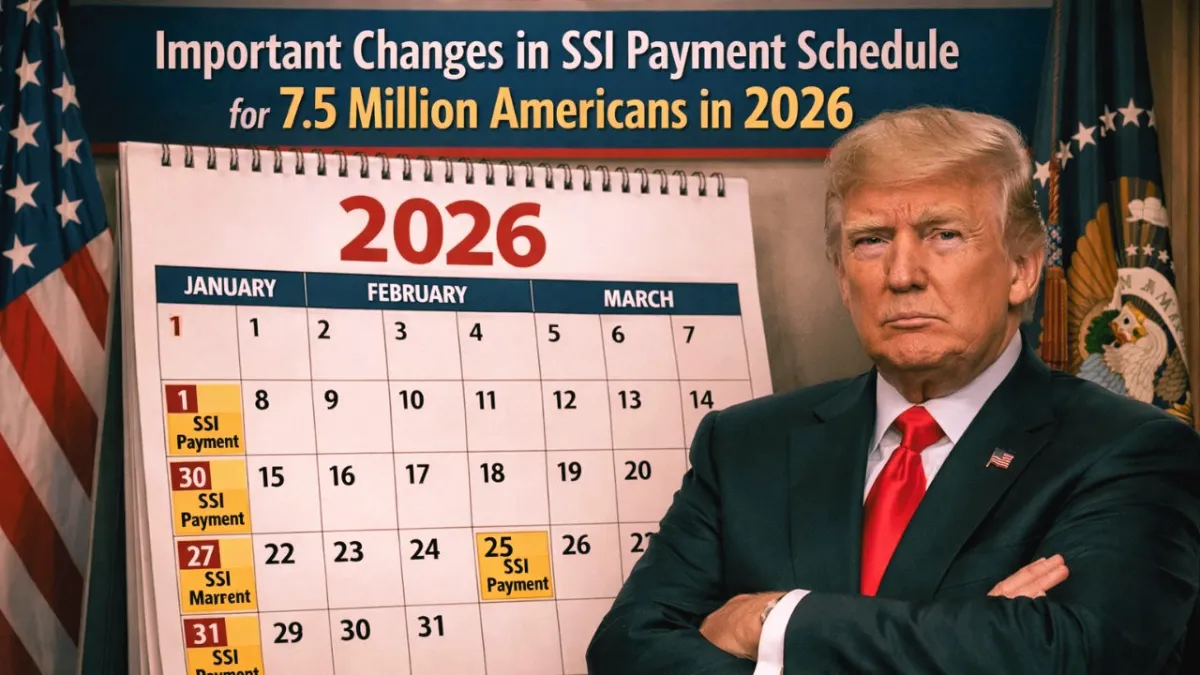
In 2026, important adjustments to the Supplemental Security Income payment schedule are expected to affect nearly 7.5 million Americans. These changes are not about benefit cuts or new eligibility rules, but about how and when monthly SSI payments are delivered. Understanding the updated schedule is essential for beneficiaries who rely on SSI to cover rent, food, and daily living expenses.
What SSI Is and Why the Payment Schedule Matters
Supplemental Security Income provides monthly financial assistance to low income seniors, disabled adults, and children with disabilities. Because many recipients depend on these payments as their primary income source, even small timing changes can affect budgeting and bill payments.
SSI is administered by the Social Security Administration, which sets payment dates based on federal rules and calendar structure.
Why the SSI Payment Schedule Changes in 2026
SSI payments are normally issued on the first day of each month. When the first falls on a weekend or a federal holiday, payments are sent earlier, usually on the last business day of the previous month.
In 2026, several months begin on weekends or holidays, causing multiple early payments. This creates the impression of skipped months or double payments, even though the total annual amount remains unchanged.
How Many Americans Are Affected
About 7.5 million Americans who receive SSI will see these timing shifts. This includes seniors, people with disabilities, and families caring for disabled children. The change affects payment dates only, not benefit eligibility or monthly amounts.
Key SSI Payment Schedule Adjustments in 2026
| Month Affected | Why the Date Changes | When Payment Is Sent |
|---|---|---|
| January | New Year holiday | Late December 2025 |
| April | First falls on weekend | End of March 2026 |
| July | Weekend start | Late June 2026 |
| October | Weekend start | Late September 2026 |
| December | Holiday overlap | Late November 2026 |
Exact dates depend on the federal holiday calendar.
Does an Early Payment Mean Extra Money
No early SSI payment represents an advance, not a bonus. When a payment arrives at the end of one month, it covers the following month’s benefit. This means there may be months in 2026 where no SSI payment arrives because it was already paid early.
The total annual SSI benefit remains exactly the same.
Why Some Beneficiaries Think Payments Are Missing
Confusion often occurs when recipients see two payments in one month and none in the next. This is a normal result of the calendar shift, not a suspension or reduction of benefits.
Understanding the schedule helps avoid unnecessary concern and calls to SSA offices.
What SSI Recipients Should Do to Prepare
Beneficiaries should plan budgets carefully during months with early payments so funds last through the following month. Keeping track of the official SSI calendar is especially important for those paying rent or utilities at the beginning of the month.
No action or application is required to receive payments under the adjusted schedule.
Does This Affect Social Security Retirement or SSDI
These schedule changes apply only to SSI. Social Security retirement and Social Security Disability Insurance follow different payment calendars based on birth dates and are not affected in the same way.
Some individuals who receive both SSI and Social Security may see deposits on different days.
Conclusion:
The SSI payment schedule changes in 2026 affect when, not how much, beneficiaries are paid. Due to weekends and federal holidays, several payments will arrive earlier than usual, impacting nearly 7.5 million Americans. Understanding these timing shifts helps recipients plan expenses confidently and avoid confusion about missing or extra payments.
Disclaimer: This article is for general informational purposes only. SSI payment dates and benefit rules are subject to official Social Security Administration schedules and federal holidays. Beneficiaries should rely on official SSA notices for final and accurate payment dates.